Deprecated: Using null as an array offset is deprecated, use an empty string instead in /home/youthagripreneur/public_html/wp-includes/class-wp-block-type-registry.php on line 168
Deprecated: Using null as an array offset is deprecated, use an empty string instead in /home/youthagripreneur/public_html/wp-includes/class-wp-block-type-registry.php on line 168
Deprecated: Using null as an array offset is deprecated, use an empty string instead in /home/youthagripreneur/public_html/wp-includes/class-wp-block-type-registry.php on line 168
Deprecated: Using null as an array offset is deprecated, use an empty string instead in /home/youthagripreneur/public_html/wp-includes/class-wp-block-type-registry.php on line 168
Deprecated: Using null as an array offset is deprecated, use an empty string instead in /home/youthagripreneur/public_html/wp-includes/class-wp-block-type-registry.php on line 168
Deprecated: Using null as an array offset is deprecated, use an empty string instead in /home/youthagripreneur/public_html/wp-includes/class-wp-block-type-registry.php on line 168
Deprecated: Using null as an array offset is deprecated, use an empty string instead in /home/youthagripreneur/public_html/wp-includes/class-wp-block-type-registry.php on line 168
In August 2012, the institute convened young people at its headquarters in Ibadan, Nigeria, and launched this innovative agribusiness incubation program. Participants received technical expertise, training, and mentorship, which opened their eyes to various business opportunities across agricultural value chains. Within a year, these young entrepreneurs were managing enterprises focused on cassava, maize, soybean, banana, vegetables, fish, and swine while also exploring value addition and food processing.
After an 18-month incubation period, participants developed bankable business plans and accessed loans from commercial banks to establish their independent agribusiness enterprises. Many, including young women, have since become owners of successful agribusiness firms.
In collaboration with partners and through engagement with stakeholders at all levels, IYA is also breaking stereotypes and accelerating women’s economic advancement in the agricultural sector through training, access to credit, and market opportunities. It has helped many young women overcome the economic, cultural, religious, and social barriers to accelerating their progress.
Beneficiaries of the program, such as the CEO of Abiqueeneth Ventures, Queen Opute, have established successful poultry and catfish businesses in Epe, Lagos. Hassana Robert, another beneficiary, runs a poultry business in Zaria, Kaduna, and plans to expand into selling chicken dung as manure for farms.
One beneficiary shared her story of losing her business capital and incurring debts due to the COVID-19 pandemic, which led to the loss of 2000 birds. Through IYA, she recovered, and she expressed gratitude for the support. “IITA has really touched our lives and inspired us. In the future, I hope to have a foundation like this to help women stand on their own and become their own boss,” she said.
By providing training, mentorship, coaching, and access to finance and markets, IYA has significantly increased women’s participation in agriculture, with 70% of participants being women. This has created a sustainable workforce that contributes to food security.
At the recent International Women’s Day celebration in IITA, the Agribusiness Hub Manager at IFAD-Agrihub, Waheed Oni, noted that in addition to investing in women agripreneurs to enhance their livelihoods, the IYA programs have mostly been led by women in the last ten years. “The initiative has 87 staff across seven countries in Africa with 51% women, and 388,504 beneficiaries of the program with 47% women,” he said.

Deprecated: Using null as an array offset is deprecated, use an empty string instead in /home/youthagripreneur/public_html/wp-includes/class-wp-block-type-registry.php on line 168
Deprecated: Using null as an array offset is deprecated, use an empty string instead in /home/youthagripreneur/public_html/wp-includes/class-wp-block-type-registry.php on line 168
Deprecated: Using null as an array offset is deprecated, use an empty string instead in /home/youthagripreneur/public_html/wp-includes/class-wp-block-type-registry.php on line 168
Deprecated: Using null as an array offset is deprecated, use an empty string instead in /home/youthagripreneur/public_html/wp-includes/class-wp-block-type-registry.php on line 168
Deprecated: Using null as an array offset is deprecated, use an empty string instead in /home/youthagripreneur/public_html/wp-includes/class-wp-block-type-registry.php on line 168
Deprecated: Using null as an array offset is deprecated, use an empty string instead in /home/youthagripreneur/public_html/wp-includes/class-wp-block-type-registry.php on line 168
Deprecated: Using null as an array offset is deprecated, use an empty string instead in /home/youthagripreneur/public_html/wp-includes/class-wp-block-type-registry.php on line 168
Many young people leave their homes in the rural areas of West Africa with a dream of succeeding in the city. But all too often, they can only find poorly paid jobs in the informal sector—if they find work at all. In Nigeria, the most populous country in Africa, one in five young people is unemployed.
To stop the flow of young people out of rural areas, the IFAD-supported pilot of the Youth Employment in Agri-business and Sustainable Agriculture (YEASA) initiative gave more than 2,000 unemployed rural youth in Nigeria and Benin the skills and equipment needed to become successful agri-entrepreneurs.
Fishy business
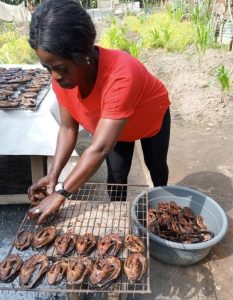 Awoniyi owns seven ponds where she stocks thousands of fish. © Onasanya Emmanuel Oludayo
35-year-old Awoniyi Folake Temitope started her smoked catfish business in Nigeria after receiving training and cash grants for drying equipment through YEASA. But soon after she started, she found that the fish in the markets weren’t quite what she needed. It was then that Awoniyi decided not only to smoke fish but to farm them as well.
Three years later, she now owns seven fish ponds stocking over 10,000 catfish. When the fish are big enough, she catches, processes, and packages them for sale under her brand, Delightsome. Awoniyi walks through her fish farm, sprinkling handfuls of fish food into each carefully tended, green-fringed pond.
“I have a farmhouse and a farm,” she says proudly. “And I have people working with me because I cannot do this work alone.”
Plantain power
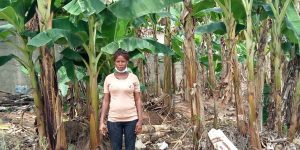
With support from YEASA, Constance now cultivates two crops instead of one. © Omotomiwa Adesanya
In Benin, 31-year-old Constance Zankran used to cultivate only banana plants. But after gaining new tools through YEASA, she added plantains to her farm. Now she can rely on two crops, instead of just one.
She also processes plantain and unripe bananas into chips, helping her reach a larger market, including supermarkets and schools across several regions.
With her diverse range of products, Constance is ensuring that she can earn a living even in uncertain times.
Rising high
For many young people in Nigeria and Benin, YEASA has offered a pathway to building the future they had always dreamed of. By starting businesses that produce high-value products, rural youth can earn as much as their urban counterparts and many even employ other rural youth as their business grows. Mentoring and entrepreneur networks help them get support and expertise—and pass on what they know to others.
Going forward, Nigeria hopes to continue YEASA’s legacy by providing young farmers with funding, internships and access to markets. In Benin, YEASA-trained youth are being hired in government agri-business programmes, where they are integrating the project’s successes into local policies.
]]>
Deprecated: Using null as an array offset is deprecated, use an empty string instead in /home/youthagripreneur/public_html/wp-includes/class-wp-block-type-registry.php on line 168
Deprecated: Using null as an array offset is deprecated, use an empty string instead in /home/youthagripreneur/public_html/wp-includes/class-wp-block-type-registry.php on line 168
Deprecated: Using null as an array offset is deprecated, use an empty string instead in /home/youthagripreneur/public_html/wp-includes/class-wp-block-type-registry.php on line 168
Deprecated: Using null as an array offset is deprecated, use an empty string instead in /home/youthagripreneur/public_html/wp-includes/class-wp-block-type-registry.php on line 168
Deprecated: Using null as an array offset is deprecated, use an empty string instead in /home/youthagripreneur/public_html/wp-includes/class-wp-block-type-registry.php on line 168
Deprecated: Using null as an array offset is deprecated, use an empty string instead in /home/youthagripreneur/public_html/wp-includes/class-wp-block-type-registry.php on line 168
Deprecated: Using null as an array offset is deprecated, use an empty string instead in /home/youthagripreneur/public_html/wp-includes/class-wp-block-type-registry.php on line 168
The Project which started in 2019 is to train 1000 youths in 10 Agricultural commodities by three institutes. IITA being part of the implementing institute is to train 200 youths along the value chain of Cassava, Maize, Cowpea/Soybean and plantain.
In the first year, 57 youths were trained in Nigeria and the republic of Benin for two weeks, while 123 were trained in the second year. The dynamics of the training changed in the second year due to COVID-19 pandemic, with the introduction of online training for two weeks.
The Final training for the project was done in September 2021, with 32 youths trained online on Soybean/Cowpea and Maize for two weeks, using the IITA Youth Agripreneurs e-learning platform http://aglearn.youthagripreneurs.org/. 20 out of the 32 participants were invited for the practical session based on their performances online. The practical session covered production, processing/value addition, soft skills and entrepreneurial skills.
The trainees are currently writing their business plans which will be used in giving of grants after it has been reviewed by the business development expert.
]]>Deprecated: Using null as an array offset is deprecated, use an empty string instead in /home/youthagripreneur/public_html/wp-includes/class-wp-block-type-registry.php on line 168
Deprecated: Using null as an array offset is deprecated, use an empty string instead in /home/youthagripreneur/public_html/wp-includes/class-wp-block-type-registry.php on line 168
Deprecated: Using null as an array offset is deprecated, use an empty string instead in /home/youthagripreneur/public_html/wp-includes/class-wp-block-type-registry.php on line 168
Deprecated: Using null as an array offset is deprecated, use an empty string instead in /home/youthagripreneur/public_html/wp-includes/class-wp-block-type-registry.php on line 168
Deprecated: Using null as an array offset is deprecated, use an empty string instead in /home/youthagripreneur/public_html/wp-includes/class-wp-block-type-registry.php on line 168
Deprecated: Using null as an array offset is deprecated, use an empty string instead in /home/youthagripreneur/public_html/wp-includes/class-wp-block-type-registry.php on line 168
Deprecated: Using null as an array offset is deprecated, use an empty string instead in /home/youthagripreneur/public_html/wp-includes/class-wp-block-type-registry.php on line 168
The Youth Employment in Agribusiness and Sustainable Agriculture (YEASA) project aims to build the technical, entrepreneurial, and soft skills of young adults (18-35 years), as a means of improving their productive capacity and increasing their benefits from existing agri-food systems. It is sponsored by the International Fund for Agricultural Development (IFAD) and it is implemented by three Institutions; Afe Babalola University Ado-Ekiti (ABUAD), the grant recipient, and the International Institute of Tropical Agriculture (IITA) and AfricaRice as sub-recipient.
The program which trained over 200 agripreneurs in Nigeria and Benin republic in 2019, will train 1,000 unemployed men and women youths with at least secondary education in Nigeria and the Benin Republic in its 3-year project life cycle with other project partners.
About 10,000 applicants applied for the program through the website www.yeasa.org, successful applicants received a 4 weeks of intensive online training on a range of agricultural commodities such as soybean/cowpea, maize, plantain, cassava, agric-machinery fabrication as well as soft skills like business communication, marketing, emotional intelligence, and business plan development.
 Screenshot of the e-learning platform
We have always appreciated the use of ICT tools in training, but considering Agriculture is a practical science we have always opted for the more conventional approach. COVID_19 has propelled us to utilise the online training approach and so far, it has worked well. This will enable us to reach out to more youths going forward
said the IITA-YEASA coordinator, Adunoye Oluyemi.
Trained agripreneurs will be selected based on their performance during the training, including market opportunity, financial understanding, scalability, leadership, and entrepreneurial skill to start their businesses.
]]>Deprecated: Using null as an array offset is deprecated, use an empty string instead in /home/youthagripreneur/public_html/wp-includes/class-wp-block-type-registry.php on line 168
Deprecated: Using null as an array offset is deprecated, use an empty string instead in /home/youthagripreneur/public_html/wp-includes/class-wp-block-type-registry.php on line 168
Deprecated: Using null as an array offset is deprecated, use an empty string instead in /home/youthagripreneur/public_html/wp-includes/class-wp-block-type-registry.php on line 168
Deprecated: Using null as an array offset is deprecated, use an empty string instead in /home/youthagripreneur/public_html/wp-includes/class-wp-block-type-registry.php on line 168
Deprecated: Using null as an array offset is deprecated, use an empty string instead in /home/youthagripreneur/public_html/wp-includes/class-wp-block-type-registry.php on line 168
Deprecated: Using null as an array offset is deprecated, use an empty string instead in /home/youthagripreneur/public_html/wp-includes/class-wp-block-type-registry.php on line 168
Deprecated: Using null as an array offset is deprecated, use an empty string instead in /home/youthagripreneur/public_html/wp-includes/class-wp-block-type-registry.php on line 168
The beneficiaries were full of praise for the YEASA project. They particularly commended the integrity of the program in picking candidates based on merit, the impactful online and on-site training, and most importantly the grant. The grant is made up of both the cash grant and equipment needed for their business operation in the crop production or value addition business.

The second year of the YEASA project started with the application phase in July 2020 and progressed to the online training phase where 200 agripreneurs were trained on the key elements of setting up a successful agribusiness enterprise through various production courses and business soft skill. A total of 103 were selected after the business plan screening stage.
The final 103 grant awardees had their businesses awarded the grants because they met the set criteria, including business scalability, unique selling proposition, a good financial statement of the business, and overall business concept.
The 2020 edition is the second year of the 3-years project and brings the total number of direct beneficiaries to 150 and the total amount of grants so far awarded to beneficiaries since 2019 is $75,000.
]]>