Deprecated: Elementor\Core\Files\CSS\Post::add_controls_stack_style_rules(): Implicitly marking parameter $all_controls as nullable is deprecated, the explicit nullable type must be used instead in /home/youthagripreneur/public_html/wp-content/plugins/elementor/core/files/css/post.php on line 221
Deprecated: Elementor\Core\Files\CSS\Base::add_controls_stack_style_rules(): Implicitly marking parameter $all_controls as nullable is deprecated, the explicit nullable type must be used instead in /home/youthagripreneur/public_html/wp-content/plugins/elementor/core/files/css/base.php on line 550
Deprecated: Elementor\Core\Files\CSS\Base::get_active_controls(): Implicitly marking parameter $controls as nullable is deprecated, the explicit nullable type must be used instead in /home/youthagripreneur/public_html/wp-content/plugins/elementor/core/files/css/base.php on line 912
Deprecated: Elementor\Core\Files\CSS\Base::get_active_controls(): Implicitly marking parameter $settings as nullable is deprecated, the explicit nullable type must be used instead in /home/youthagripreneur/public_html/wp-content/plugins/elementor/core/files/css/base.php on line 912
Deprecated: Elementor\Core\Files\CSS\Base::get_style_controls(): Implicitly marking parameter $controls as nullable is deprecated, the explicit nullable type must be used instead in /home/youthagripreneur/public_html/wp-content/plugins/elementor/core/files/css/base.php on line 940
Deprecated: Elementor\Core\Files\CSS\Base::get_style_controls(): Implicitly marking parameter $settings as nullable is deprecated, the explicit nullable type must be used instead in /home/youthagripreneur/public_html/wp-content/plugins/elementor/core/files/css/base.php on line 940
Deprecated: Elementor\Core\DynamicTags\Dynamic_CSS::add_controls_stack_style_rules(): Implicitly marking parameter $all_controls as nullable is deprecated, the explicit nullable type must be used instead in /home/youthagripreneur/public_html/wp-content/plugins/elementor/core/dynamic-tags/dynamic-css.php on line 104
Deprecated: Elementor\Stylesheet::add_rules(): Implicitly marking parameter $query as nullable is deprecated, the explicit nullable type must be used instead in /home/youthagripreneur/public_html/wp-content/plugins/elementor/includes/stylesheet.php on line 141
Deprecated: Using null as an array offset is deprecated, use an empty string instead in /home/youthagripreneur/public_html/wp-includes/class-wp-block-type-registry.php on line 168
Deprecated: Using null as an array offset is deprecated, use an empty string instead in /home/youthagripreneur/public_html/wp-includes/class-wp-block-type-registry.php on line 168
Deprecated: Using null as an array offset is deprecated, use an empty string instead in /home/youthagripreneur/public_html/wp-includes/class-wp-block-type-registry.php on line 168
Deprecated: Using null as an array offset is deprecated, use an empty string instead in /home/youthagripreneur/public_html/wp-includes/class-wp-block-type-registry.php on line 168
Deprecated: Using null as an array offset is deprecated, use an empty string instead in /home/youthagripreneur/public_html/wp-includes/class-wp-block-type-registry.php on line 168
Deprecated: Using null as an array offset is deprecated, use an empty string instead in /home/youthagripreneur/public_html/wp-includes/class-wp-block-type-registry.php on line 168
Deprecated: Using null as an array offset is deprecated, use an empty string instead in /home/youthagripreneur/public_html/wp-includes/class-wp-block-type-registry.php on line 168
Deprecated: Using null as an array offset is deprecated, use an empty string instead in /home/youthagripreneur/public_html/wp-includes/class-wp-block-type-registry.php on line 168
Deprecated: Using null as an array offset is deprecated, use an empty string instead in /home/youthagripreneur/public_html/wp-includes/class-wp-block-type-registry.php on line 168
Deprecated: Using null as an array offset is deprecated, use an empty string instead in /home/youthagripreneur/public_html/wp-includes/class-wp-block-type-registry.php on line 168
Deprecated: Using null as an array offset is deprecated, use an empty string instead in /home/youthagripreneur/public_html/wp-includes/class-wp-block-type-registry.php on line 168
Deprecated: Using null as an array offset is deprecated, use an empty string instead in /home/youthagripreneur/public_html/wp-includes/class-wp-block-type-registry.php on line 168
Deprecated: Using null as an array offset is deprecated, use an empty string instead in /home/youthagripreneur/public_html/wp-includes/class-wp-block-type-registry.php on line 168
Deprecated: Using null as an array offset is deprecated, use an empty string instead in /home/youthagripreneur/public_html/wp-includes/class-wp-block-type-registry.php on line 168
(TAAT) initiative made a significant impact by participating and showcasing technologies from the
Beans, Maize, and Orange Fleshed Sweet Potato (OFSP) compacts. The Kilimo Biashara Expo is an
annual event organized by the Kenya Agricultural and Livestock Research Organization (KALRO),
aimed at promoting and showcasing innovations, technologies, and practices in the agricultural sector.
The expo serves as a platform for farmers, researchers, policymakers, and other stakeholders to assemble,
share knowledge, and explore opportunities for improving agricultural productivity and sustainability. It
typically features exhibitions, demonstrations, workshops, and networking opportunities focused on
various aspects of farming, including crop production, livestock farming, agribusiness, and agricultural
research. Through the Kilimo Biashara Expo, KALRO aims to support the growth and development of the
agricultural sector in Kenya by fostering collaboration, innovation, and knowledge exchange among
stakeholders.
TAAT was represented by the ENABLE TAAT Compact and the TAAT Clearinghouse, which
effectively engaged with farmers, researchers, and stakeholders, providing hands-on demonstrations of
the diverse array of TAAT technologies. A noteworthy aspect of TAAT’s presence was the inclusion of
private sector partners within the commodity compacts, particularly in the beans segment, where value
addition was emphasized. These partners presented innovative products such as flour, noodles, and
precooked beans derived from high-iron beans, demonstrating the potential for economic diversification
and enhanced nutritional value. Furthermore, the OFSP compact seized the opportunity to exhibit various
value-addition methods for OFSP tubers, showcasing this nutritious crop’s versatility and market
potential.
The TAAT stand emerged as one of the most engaging and dynamic exhibits at the expo, drawing in over
two thousand (2,000) farmers eager to learn and explore the transformative technologies and practices
showcased. This enthusiastic response underscores the importance and relevance of TAAT’s efforts to
drive agricultural innovation, sustainability, and prosperity within the Kenyan farming community.

Deprecated: Using null as an array offset is deprecated, use an empty string instead in /home/youthagripreneur/public_html/wp-includes/class-wp-block-type-registry.php on line 168
Deprecated: Using null as an array offset is deprecated, use an empty string instead in /home/youthagripreneur/public_html/wp-includes/class-wp-block-type-registry.php on line 168
Deprecated: Using null as an array offset is deprecated, use an empty string instead in /home/youthagripreneur/public_html/wp-includes/class-wp-block-type-registry.php on line 168
Deprecated: Using null as an array offset is deprecated, use an empty string instead in /home/youthagripreneur/public_html/wp-includes/class-wp-block-type-registry.php on line 168
Deprecated: Using null as an array offset is deprecated, use an empty string instead in /home/youthagripreneur/public_html/wp-includes/class-wp-block-type-registry.php on line 168
Deprecated: Using null as an array offset is deprecated, use an empty string instead in /home/youthagripreneur/public_html/wp-includes/class-wp-block-type-registry.php on line 168
Deprecated: Using null as an array offset is deprecated, use an empty string instead in /home/youthagripreneur/public_html/wp-includes/class-wp-block-type-registry.php on line 168
At the beginning of their venture, they leased one-eighth of an acre at Dukuma Dam, Makueni County, where they began planting and selling OFSP and other vegetables. Within a year, their customer base had increased hence the need for an expansion of their business. The team acquired two acres of land for production to meet the demand. Jonathan and Ian have attributed their success to their encounter with ENABLE-TAAT in Kibwezi.
“If it was not for the experience we had with the ENABLE-TAAT in Kibwezi, we could not have started our journey of agripreneurship and doing agriculture as a business. We learnt practical skills like land preparations, making a plan for our businesses, proper record keeping, good agricultural practices and integrated pest control mechanisms. We also learnt a lot on group dynamics and how to deal with various customers,” they said.
According to Elizabeth Muema, ENABLE-TAAT liaison officer in Kenya, “The two youth have displayed great performance in their areas of operation and we all meet monthly to share experiences and updates. We have an incubation center at the University of Nairobi, consisting of 12 graduates split into groups from various disciplines and specialization. Ian and Jonathan are able to help the group with valuable ideas from their own enterprise.”
Shortly after, Jonathan and Ian were inspired to train two other graduate-youth. Since then, the team has focused on transforming other youth groups with their expertise and knowledge.
Currently, they are networking with three more groups who are practicing agripreneurship despite the few challenges they meet as startups. Many of their trainees have shown lots of improvement after getting business advice and mentorship from Ian and Jonathan.
Although they are both graduates of agricultural studies from the University of Nairobi, ENABLE-TAAT introduced them to agribusiness and profit-making. The compact connects youth to the process of agricultural transformation necessary to secure economic prosperity through youth-led agribusinesses.
]]>Deprecated: Using null as an array offset is deprecated, use an empty string instead in /home/youthagripreneur/public_html/wp-includes/class-wp-block-type-registry.php on line 168
Deprecated: Using null as an array offset is deprecated, use an empty string instead in /home/youthagripreneur/public_html/wp-includes/class-wp-block-type-registry.php on line 168
Deprecated: Using null as an array offset is deprecated, use an empty string instead in /home/youthagripreneur/public_html/wp-includes/class-wp-block-type-registry.php on line 168
Deprecated: Using null as an array offset is deprecated, use an empty string instead in /home/youthagripreneur/public_html/wp-includes/class-wp-block-type-registry.php on line 168
Deprecated: Using null as an array offset is deprecated, use an empty string instead in /home/youthagripreneur/public_html/wp-includes/class-wp-block-type-registry.php on line 168
Deprecated: Using null as an array offset is deprecated, use an empty string instead in /home/youthagripreneur/public_html/wp-includes/class-wp-block-type-registry.php on line 168
Deprecated: Using null as an array offset is deprecated, use an empty string instead in /home/youthagripreneur/public_html/wp-includes/class-wp-block-type-registry.php on line 168
Beyond producing chicken, Everlyne discovered a new passion and committed herself towards mentoring other poultry farmers within Kibwezi. Since January 2021, she has been actively involved with Bidii Self Help Group, Kibwezi, a youth group that requests for training specifically on poultry and goat farming. She has mentored more than five other youth in poultry farming and her business model has proven to be very efficient.
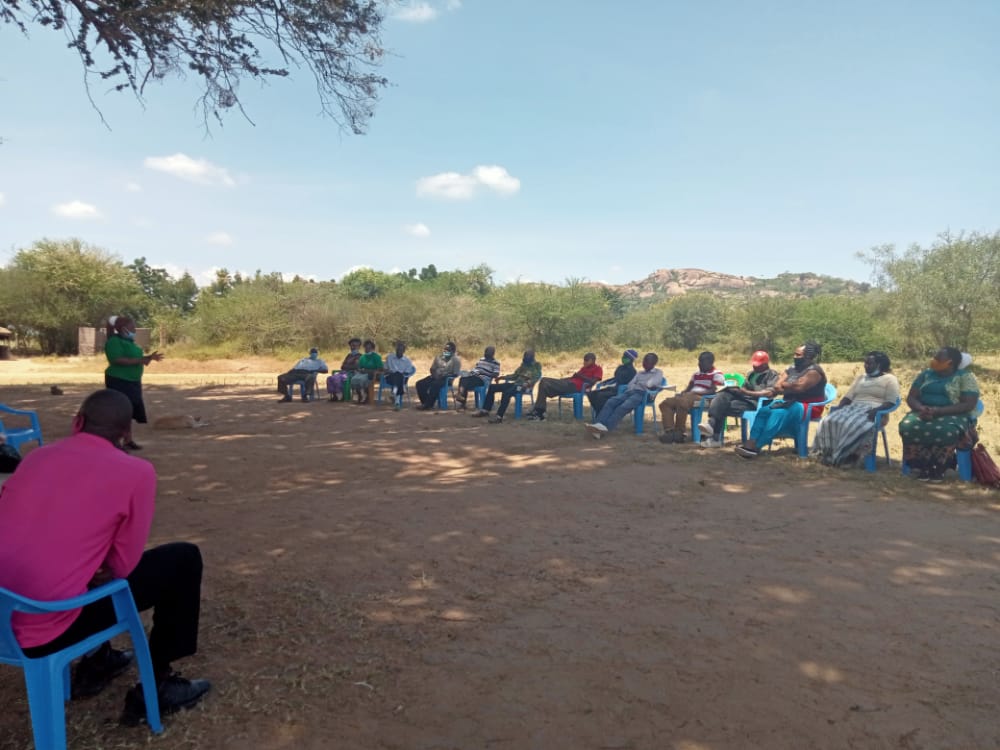 Everlyne Mwende sensitizing members of the Bidii Self Help Group Kibwezi Kenya
Everlyne’s resourcefulness is in line with ENABLE-TAAT’s “Train the trainers” initiative, where beneficiary youths are trained to become trainers in their local communities, thus creating a network of young people who have the skills and careers that contribute to African agricultural transformation. More of such stories are budding, as the compact continues to track the record of previously trained youth.
During a “Train the trainers” seminar in March, beneficiaries from Nigeria, Kenya, Uganda, Tanzania, Zambia and Democratic Republic of Congo (DRC) were motivated to transfer the knowledge they have received from ENABLE-TAAT in their communities.
Everlyne is determined to continue sharing her production and business knowledge with other youth in her community and in the Bidii Self Help group. She will be selling more chicks to farmers hence adding to her revenue streams.
]]>Deprecated: Using null as an array offset is deprecated, use an empty string instead in /home/youthagripreneur/public_html/wp-includes/class-wp-block-type-registry.php on line 168
Deprecated: Using null as an array offset is deprecated, use an empty string instead in /home/youthagripreneur/public_html/wp-includes/class-wp-block-type-registry.php on line 168
Deprecated: Using null as an array offset is deprecated, use an empty string instead in /home/youthagripreneur/public_html/wp-includes/class-wp-block-type-registry.php on line 168
Deprecated: Using null as an array offset is deprecated, use an empty string instead in /home/youthagripreneur/public_html/wp-includes/class-wp-block-type-registry.php on line 168
Deprecated: Using null as an array offset is deprecated, use an empty string instead in /home/youthagripreneur/public_html/wp-includes/class-wp-block-type-registry.php on line 168
Deprecated: Using null as an array offset is deprecated, use an empty string instead in /home/youthagripreneur/public_html/wp-includes/class-wp-block-type-registry.php on line 168
Deprecated: Using null as an array offset is deprecated, use an empty string instead in /home/youthagripreneur/public_html/wp-includes/class-wp-block-type-registry.php on line 168
The young people have been able to display rich knowledge, skills and experience in aquaculture and aquatic sciences, an experience which they gained from academic endeavors and fish value-chain training by ENABLE-TAAT.
After their participating in ENABLE-TAAT aquaculture training in 2018, V-Aquatic Blue has successfully carried out projects on pond construction, cage construction and management, such as construction and installation of cages in Mwer Dam and Lake Kanyaboli, Siaya County, Kenya.
In addition, the company has collaborated with ENABLE-TAAT to carry out several agribusiness incubation programs and mentorship of more than 300 youths on the aquaculture value chain. They have also carried out client-specific training sessions to individual farmers and farmer groups in West Kenya.
Currently, the enterprise is extending its reach by collaborating with individuals and organizations from the private and public sectors. Through these collaborations, they are identifying gaps and providing services that will help to close the gap in the aquaculture sector and increase the productivity within the sector.
]]>