Deprecated: Using null as an array offset is deprecated, use an empty string instead in /home/youthagripreneur/public_html/wp-includes/class-wp-block-type-registry.php on line 168
Deprecated: Using null as an array offset is deprecated, use an empty string instead in /home/youthagripreneur/public_html/wp-includes/class-wp-block-type-registry.php on line 168
Deprecated: Using null as an array offset is deprecated, use an empty string instead in /home/youthagripreneur/public_html/wp-includes/class-wp-block-type-registry.php on line 168
Deprecated: Using null as an array offset is deprecated, use an empty string instead in /home/youthagripreneur/public_html/wp-includes/class-wp-block-type-registry.php on line 168
Deprecated: Using null as an array offset is deprecated, use an empty string instead in /home/youthagripreneur/public_html/wp-includes/class-wp-block-type-registry.php on line 168
Deprecated: Using null as an array offset is deprecated, use an empty string instead in /home/youthagripreneur/public_html/wp-includes/class-wp-block-type-registry.php on line 168
Deprecated: Using null as an array offset is deprecated, use an empty string instead in /home/youthagripreneur/public_html/wp-includes/class-wp-block-type-registry.php on line 168
One notable initiative under this collaboration is the ENABLE TAAT project, carried out in conjunction with SLARiS and the Ministry of Agriculture. In December, the project successfully executed an extensive training program for 100 youths, aiming to equip them with essential skills in entrepreneurship, business management, and business plan development. The overarching goal is to enhance agricultural productivity, strengthen food security, and unlock agribusiness opportunities across Sierra Leone.
The impact of the training is already evident, as empowered youths are actively establishing viable businesses. These enterprises not only elevate the livelihoods of the youth involved but also contribute to improved food security and the creation of employment opportunities for their peers. In a bid to further support these emerging businesses, ENABLE TAAT is collaborating with Apex Bank in Sierra Leone to provide accessible and affordable finance options.
As Sierra Leone embarks on this transformative journey in agriculture, IITA, through its Youth in Agribusiness office, is positioned to take a lead role in the FEED SALONE Project. This initiative aims to make a tangible and enduring difference in Sierra Leone’s agricultural sector, laying the foundation for a sustainable and prosperous future.
The collaboration between IITA and the Ministry of Agriculture, particularly through initiatives like ENABLE TAAT and the upcoming FEED SALONE Project, showcases a commitment to sustainable agricultural development in Sierra Leone. The focus on empowering youth, fostering entrepreneurship, and providing financial support underscores the potential for positive, lasting impacts on the nation’s agricultural landscape.
Deprecated: Using null as an array offset is deprecated, use an empty string instead in /home/youthagripreneur/public_html/wp-includes/class-wp-block-type-registry.php on line 168
Deprecated: Using null as an array offset is deprecated, use an empty string instead in /home/youthagripreneur/public_html/wp-includes/class-wp-block-type-registry.php on line 168
Deprecated: Using null as an array offset is deprecated, use an empty string instead in /home/youthagripreneur/public_html/wp-includes/class-wp-block-type-registry.php on line 168
Deprecated: Using null as an array offset is deprecated, use an empty string instead in /home/youthagripreneur/public_html/wp-includes/class-wp-block-type-registry.php on line 168
Deprecated: Using null as an array offset is deprecated, use an empty string instead in /home/youthagripreneur/public_html/wp-includes/class-wp-block-type-registry.php on line 168
Deprecated: Using null as an array offset is deprecated, use an empty string instead in /home/youthagripreneur/public_html/wp-includes/class-wp-block-type-registry.php on line 168
Deprecated: Using null as an array offset is deprecated, use an empty string instead in /home/youthagripreneur/public_html/wp-includes/class-wp-block-type-registry.php on line 168
In collaboration with the Government of the Netherlands, the YAS project held training sessions for beneficiaries in the Federal Capital Territory (FCT), Oyo, Kano, and Ogun states in 2023. The selection of participants was meticulously based on the criteria set for the project.
The beneficiaries, comprising 543 new entrants to agriculture and 1,375 established business owners eager to enhance their knowledge and productivity, underwent comprehensive training in the value chains of different commodities, including Poultry, Aquaculture, Horticulture, and Cassava Processing. The objective is for participants to utilize their acquired knowledge and skills to establish successful enterprises or expand their existing businesses.
In 2023, the project’s inaugural year, the beneficiaries included 463 youths from Ogun State, 473 from the FCT, 476 from Oyo State, and 506 from Kano State. The training covered the production, processing, marketing, and logistics components of the value chains of various commodities. Classroom teaching and field demonstrations were employed to provide a holistic learning experience.
Additionally, beneficiaries were given the needed support, including access to markets, investors, finance, and inputs, as well as coaching and mentoring. They were also reminded about the need to be part of a cooperative and educated on how to access finance by YAS implementing partner, Bopinc, a Dutch NGO.
Also, in most of the states, agribusiness hubs have been established, both for the training and post-training activities of trainees. For example, in Kano State, the project established an aquaculture hub with 1,000 jumbo-sized fish, used for the training and currently being used for continued learning by trainees.
The project’s goal is to, among other things, train 10,000 youths between the ages of 18 and 35 in viable, sustainable agribusiness enterprises using innovative climate-smart technologies and business practices that increase income and productivity. The project also aims to encourage the beneficiaries to set up full-scale production and service facilities.
Well aware of the potential of agriculture to generate employment and create wealth, the YAS project identifies youths as key drivers of this potential in Nigeria. The project is firmly committed to delivering on this mandate.
The beneficiaries in the various tracks applauded the free training, which they described as an eye-opener and a much-needed boost to their business and entrepreneurship aspirations.
One of the beneficiaries, Mr David Ekene, visibly elated by the training opportunity, said he had always loved all segments of agriculture and was privileged to be part of the training.
“This has been my old time dream,” he noted, as he boasted that with what he learnt, he was prepared to build a business empire while ensuring that other people benefited from the knowledge he acquired.
Ekene stated, “I find myself privileged to be part of this great move and training. In Africa, we have the land and what it takes, but the technical knowledge on how to go about it is what YAS has brought to us. With this training, I will have an opportunity to create a business empire, not just a little business. The YAS experience is amazing, exciting, and mind-blowing.”
Also, a master’s student in Oyo State, Ms Sanusi Rebecca Titilayo, described her training experience as excellent.
She added, “I learnt aquaculture and value addition, and I have been able to learn how to set up my pond, stock the pond, feed the fish, including the business aspect of it. I don’t want to waste this knowledge; I intend to start up my pond very soon and I will progress from there. The YAS training was wonderful.”
This project aims to train 10,000 youths in diverse agricultural value chains and support the beneficiaries who would contribute to enhancing agricultural productivity, climate resilience, access to services, and food and nutrition in Nigeria.
As we prepare to commence the selection process for the next cohorts of trainees in a few months, we extend an open invitation to young people aged 18 to 35, farmers, entrepreneurs, and those passionate about innovative, modern, and profitable farming to seize this opportunity.
Our firm belief in the ability of educated and supported youths to steer the needed transformation in the agricultural sector as well as engender economic growth, technological advancement, and sustainable agriculture is at the core of this project. We envision the YAS project inspiring a new generation of young Agripreneurs while fostering a thriving community of young farmers with a shared vision of sustainable success.


Deprecated: Using null as an array offset is deprecated, use an empty string instead in /home/youthagripreneur/public_html/wp-includes/class-wp-block-type-registry.php on line 168
Deprecated: Using null as an array offset is deprecated, use an empty string instead in /home/youthagripreneur/public_html/wp-includes/class-wp-block-type-registry.php on line 168
Deprecated: Using null as an array offset is deprecated, use an empty string instead in /home/youthagripreneur/public_html/wp-includes/class-wp-block-type-registry.php on line 168
Deprecated: Using null as an array offset is deprecated, use an empty string instead in /home/youthagripreneur/public_html/wp-includes/class-wp-block-type-registry.php on line 168
Deprecated: Using null as an array offset is deprecated, use an empty string instead in /home/youthagripreneur/public_html/wp-includes/class-wp-block-type-registry.php on line 168
Deprecated: Using null as an array offset is deprecated, use an empty string instead in /home/youthagripreneur/public_html/wp-includes/class-wp-block-type-registry.php on line 168
Deprecated: Using null as an array offset is deprecated, use an empty string instead in /home/youthagripreneur/public_html/wp-includes/class-wp-block-type-registry.php on line 168
The park provides opportunities for beneficiaries to learn from the challenges encountered by seasoned farmers and agricultural experts who serve as mentors. It also provides affordable financing options to help beneficiaries scale their operations and ensure long-term sustainability.
One of the beneficiaries, Mr. Timothy Brose Semasa, who also serves as the Chairman of the Community Development Association in Ogologbo, Badagry West, Lagos, said he got interested in the Agripark initiative in order to build upon the knowledge he acquired during the training.
“My group members and I are currently involved in the fish business”, he says “We intend to leverage the Agripark for our initial production, cultivate a loyal customer base, and access neighboring markets before transitioning to a permanent site. This strategy ensures we do not incur losses due to a lack of market demand.”
Elaborating on the proactive approach they deploy, he says, “We have been engaging with women at the fish market in Agbalanta, Badagry, and have also reached agreements with fish buyers at Owode Apa Badagry Market. Fish farming is a promising enterprise, characterized by consistent demand and profit potential, as people will always eat fish. In our pursuit of long-term sustainability, my group members and I are actively exploring opportunities for support, including access to financial linkage and favorable loan rates.”
]]>
Deprecated: Using null as an array offset is deprecated, use an empty string instead in /home/youthagripreneur/public_html/wp-includes/class-wp-block-type-registry.php on line 168
Deprecated: Using null as an array offset is deprecated, use an empty string instead in /home/youthagripreneur/public_html/wp-includes/class-wp-block-type-registry.php on line 168
Deprecated: Using null as an array offset is deprecated, use an empty string instead in /home/youthagripreneur/public_html/wp-includes/class-wp-block-type-registry.php on line 168
Deprecated: Using null as an array offset is deprecated, use an empty string instead in /home/youthagripreneur/public_html/wp-includes/class-wp-block-type-registry.php on line 168
Deprecated: Using null as an array offset is deprecated, use an empty string instead in /home/youthagripreneur/public_html/wp-includes/class-wp-block-type-registry.php on line 168
Deprecated: Using null as an array offset is deprecated, use an empty string instead in /home/youthagripreneur/public_html/wp-includes/class-wp-block-type-registry.php on line 168
Deprecated: Using null as an array offset is deprecated, use an empty string instead in /home/youthagripreneur/public_html/wp-includes/class-wp-block-type-registry.php on line 168
The PICAGL Project, which is funded by the World Bank, is instrumental in providing technical and business development training across various agricultural value chains. It also plays a pivotal role in connecting young entrepreneurs with the necessary financial resources to implement their business plans. The initiative has led to the emergence of 180 youth-led enterprises, contributed to the expansion of 60 existing youth-led enterprises, and increased youth employment through the enterprises.
Speaking, Dr. Chaudhuri challenged the IYA with the question: “How many Nigerians turn 18 every year, and how many of them hold a university degree?” The poser highlighted the challenges and risks associated with targeting a young audience for the IYA’s project and securing World Bank financing. It emphasized the complexity of aligning IYA goals with the demographic realities of Nigeria.
The dialogue opened the potential for collaboration with the World Bank to access funding and addressed the challenges posed by the intricacies of government policies and bureaucratic bottlenecks.

Deprecated: Using null as an array offset is deprecated, use an empty string instead in /home/youthagripreneur/public_html/wp-includes/class-wp-block-type-registry.php on line 168
Deprecated: Using null as an array offset is deprecated, use an empty string instead in /home/youthagripreneur/public_html/wp-includes/class-wp-block-type-registry.php on line 168
Deprecated: Using null as an array offset is deprecated, use an empty string instead in /home/youthagripreneur/public_html/wp-includes/class-wp-block-type-registry.php on line 168
Deprecated: Using null as an array offset is deprecated, use an empty string instead in /home/youthagripreneur/public_html/wp-includes/class-wp-block-type-registry.php on line 168
Deprecated: Using null as an array offset is deprecated, use an empty string instead in /home/youthagripreneur/public_html/wp-includes/class-wp-block-type-registry.php on line 168
Deprecated: Using null as an array offset is deprecated, use an empty string instead in /home/youthagripreneur/public_html/wp-includes/class-wp-block-type-registry.php on line 168
Deprecated: Using null as an array offset is deprecated, use an empty string instead in /home/youthagripreneur/public_html/wp-includes/class-wp-block-type-registry.php on line 168
Recently, a team from the AfDB, TAAT, and ENABLE TAAT visited Malawi to meet with the Malawian government and other stakeholders to discuss activities for the second phase of AIYAP. During the visit, the team discussed the implementation of innovative irrigation technologies and techniques that can enhance agricultural productivity and create employment opportunities for the youth. Additionally, they explored potential partnerships with local organizations to ensure sustainable and inclusive growth in the agricultural sector.
Part of the actionable plans for AIYAP II, which will be implemented in 2024, include training young people in the value chains of fish production, beekeeping, and business development and partnering with the International Fund for Agriculture (IFAD). When young people are equipped with the necessary skills and knowledge in these value chains, they can actively contribute to the growth of these industries and improve their livelihoods. Additionally, partnering with IFAD allows for a wider reach and greater impact in empowering youth, as their expertise and resources can be utilized to enhance the effectiveness of AIYAP II and create long-term sustainable solutions.
Ultimately, these collaborative efforts are geared towards creating sustainable initiatives, providing technical and soft skills, entrepreneurship education, and employment opportunities for Malawi’s youth.
]]>Deprecated: Using null as an array offset is deprecated, use an empty string instead in /home/youthagripreneur/public_html/wp-includes/class-wp-block-type-registry.php on line 168
Deprecated: Using null as an array offset is deprecated, use an empty string instead in /home/youthagripreneur/public_html/wp-includes/class-wp-block-type-registry.php on line 168
Deprecated: Using null as an array offset is deprecated, use an empty string instead in /home/youthagripreneur/public_html/wp-includes/class-wp-block-type-registry.php on line 168
Deprecated: Using null as an array offset is deprecated, use an empty string instead in /home/youthagripreneur/public_html/wp-includes/class-wp-block-type-registry.php on line 168
Deprecated: Using null as an array offset is deprecated, use an empty string instead in /home/youthagripreneur/public_html/wp-includes/class-wp-block-type-registry.php on line 168
Deprecated: Using null as an array offset is deprecated, use an empty string instead in /home/youthagripreneur/public_html/wp-includes/class-wp-block-type-registry.php on line 168
Deprecated: Using null as an array offset is deprecated, use an empty string instead in /home/youthagripreneur/public_html/wp-includes/class-wp-block-type-registry.php on line 168
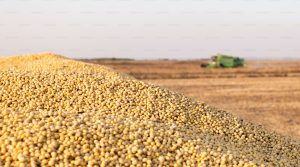
After receiving intensive training, these young people, spread across various regions of the country, are successful agribusiness owners who are promoting sustainable production of quality seeds and contributing to Zambia’s agricultural development. By diversifying their agricultural practices and embracing sustainable farming techniques, they are setting an example for others to follow in mitigating the impacts of climate change on food production. Their accomplishment not only underscores their commitment and skill but also highlights the success of the initiative in fostering the soybean seed value chain.
Despite climate change-related challenges such as floods, droughts, and extreme temperatures, the beneficiaries have been implementing foolproof strategies and recording substantial harvests, benefiting their communities and contributing to the overall economic development of the region. Beyond ensuring food security for their communities, their achievement serves as a model for other regions facing climate-related challenges. They are demonstrating resilience, pioneering sustainable farming, and driving positive change for a more resilient future.
Deprecated: Using null as an array offset is deprecated, use an empty string instead in /home/youthagripreneur/public_html/wp-includes/class-wp-block-type-registry.php on line 168
Deprecated: Using null as an array offset is deprecated, use an empty string instead in /home/youthagripreneur/public_html/wp-includes/class-wp-block-type-registry.php on line 168
Deprecated: Using null as an array offset is deprecated, use an empty string instead in /home/youthagripreneur/public_html/wp-includes/class-wp-block-type-registry.php on line 168
Deprecated: Using null as an array offset is deprecated, use an empty string instead in /home/youthagripreneur/public_html/wp-includes/class-wp-block-type-registry.php on line 168
Deprecated: Using null as an array offset is deprecated, use an empty string instead in /home/youthagripreneur/public_html/wp-includes/class-wp-block-type-registry.php on line 168
Deprecated: Using null as an array offset is deprecated, use an empty string instead in /home/youthagripreneur/public_html/wp-includes/class-wp-block-type-registry.php on line 168
Deprecated: Using null as an array offset is deprecated, use an empty string instead in /home/youthagripreneur/public_html/wp-includes/class-wp-block-type-registry.php on line 168
In the heart of Solwezi, Western Province, Zambia Youth Agripreneurs (ZYA) teamed up with IITA to make a big impact at the AgriExpo, hosted by Global Network Solutions. This month-long event offered a platform for ZYA to showcase their innovative agricultural technologies in cassava production and processing, further solidifying their position as industry leaders. At the event, members of ZYA engaged the crowd with their innovative cassava processing and value-addition technologies while sharing their passion and experience in agribusiness.
Beyond the exhibition, ZYA connected with a diverse audience of around 1800 attendees, proving the broad interest in their work and its impact. Additionally, they engaged in productive interactions with stakeholders, including the event host, Global Network Solutions, who showed a keen interest in exploring the growth and innovations in cassava processing and value addition.
Furthermore, the positive feedback and enthusiasm received from attendees and stakeholders reaffirmed the significance of ZYA’s work in driving economic growth and improving food security in the region. The Solwezi AgriExpo highlighted ZYA’s commitment to sustainable agribusiness and set the stage for exciting collaborations, opening up new paths for development and opportunity.

Mkushi Youth Skills Group secures third place at the Provincial Agriculture Show
In Kabwe, Central Province, Zambia, the spotlight was on the youth of Mkushi Youth Skills at the Provincial Agriculture Show. This event was their chance to showcase a wide range of agricultural initiatives, from fish farming to soybean and maize production, cassava processing, and value addition. They shared their experiences as entrepreneurs, emphasizing the vast opportunities in agribusiness, and encouraged their peers to consider agriculture as a career choice.
At the event, Mkushi Youth Skills Group engaged around 2,000 attendees and made a lasting impression. Their organized display and innovative approaches earned them a remarkable third-place win in the provincial agribusiness sector. In addition to demonstrating the profitability of agriculture, their achievements highlighted the potential for youth-led initiatives to drive economic growth in rural communities.
]]>
Deprecated: Using null as an array offset is deprecated, use an empty string instead in /home/youthagripreneur/public_html/wp-includes/class-wp-block-type-registry.php on line 168
Deprecated: Using null as an array offset is deprecated, use an empty string instead in /home/youthagripreneur/public_html/wp-includes/class-wp-block-type-registry.php on line 168
Deprecated: Using null as an array offset is deprecated, use an empty string instead in /home/youthagripreneur/public_html/wp-includes/class-wp-block-type-registry.php on line 168
Deprecated: Using null as an array offset is deprecated, use an empty string instead in /home/youthagripreneur/public_html/wp-includes/class-wp-block-type-registry.php on line 168
Deprecated: Using null as an array offset is deprecated, use an empty string instead in /home/youthagripreneur/public_html/wp-includes/class-wp-block-type-registry.php on line 168
Deprecated: Using null as an array offset is deprecated, use an empty string instead in /home/youthagripreneur/public_html/wp-includes/class-wp-block-type-registry.php on line 168
Deprecated: Using null as an array offset is deprecated, use an empty string instead in /home/youthagripreneur/public_html/wp-includes/class-wp-block-type-registry.php on line 168
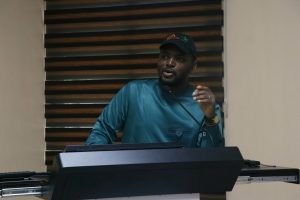
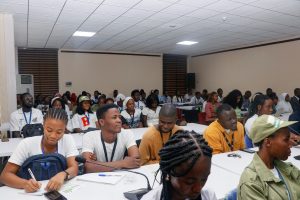
The event, aimed at highlighting the crucial role that young people play in creating an environmentally sustainable and climate-friendly future, started with an informative documentary that showcased the insights and experiences of the young. The documentary shared innovative concepts and strategies capable of reshaping the agricultural landscape. One such concept was the production of soymilk from biofortified soybean grains, not only adding value to agricultural products but also offering a healthier choice for consumers. Another notable concept highlighted in the documentary was the use of black flies in the production of fish feed. This sustainable method not only reduces feeding costs but also tackles waste management issues and fosters a circular economy.
The event featured inspiring stories, including that of Mr. Michael Akinbiyi, who attributed his transformation to his training in renewable energy at the Archdam Solar Academy, organised by the IFAD Agrihub Project. He said the training gave him essential skills to harness renewable energy effectively. Mr. John Olabisi Amole talked about his enlightening journey of utilizing black soldier fly larvae as a cost-effective solution for animal feed. The panel session exposed participants to how incorporating renewable energy into farming operations can amplify productivity, efficiency, and sustainability, which will not only promote food security but also spawn employment opportunities and propel economic growth.
The event left an indelible impact on participants, instilling a drive to explore green skills and contribute to a more sustainable future. It emphasised the critical role of research in advancing agriculture, particularly among the youth, and demonstrated the immense potential of agribusiness to foster national security and economic growth. For a more sustainable and prosperous future for Nigeria and the world, the event culminated with a call to action encouraging more young people to explore the incredible opportunities in agriculture.
Deprecated: Using null as an array offset is deprecated, use an empty string instead in /home/youthagripreneur/public_html/wp-includes/class-wp-block-type-registry.php on line 168
Deprecated: Using null as an array offset is deprecated, use an empty string instead in /home/youthagripreneur/public_html/wp-includes/class-wp-block-type-registry.php on line 168
Deprecated: Using null as an array offset is deprecated, use an empty string instead in /home/youthagripreneur/public_html/wp-includes/class-wp-block-type-registry.php on line 168
Deprecated: Using null as an array offset is deprecated, use an empty string instead in /home/youthagripreneur/public_html/wp-includes/class-wp-block-type-registry.php on line 168
Deprecated: Using null as an array offset is deprecated, use an empty string instead in /home/youthagripreneur/public_html/wp-includes/class-wp-block-type-registry.php on line 168
Deprecated: Using null as an array offset is deprecated, use an empty string instead in /home/youthagripreneur/public_html/wp-includes/class-wp-block-type-registry.php on line 168
Deprecated: Using null as an array offset is deprecated, use an empty string instead in /home/youthagripreneur/public_html/wp-includes/class-wp-block-type-registry.php on line 168
During the visit, IYA showcased its ongoing initiatives and highlighted the impacts of the projects and how they have transformed the lives of beneficiaries. The Head of IYA, Ms. Adetola Adenmosun and her team engaged the DGs in a discussion on the strong partnerships IYA has developed over the years and the invaluable lessons gained along the way. These conversations were framed within the context of IYA’s aspirations, specifically the expansion of its operational footprint and the amplification of its influence to include additional African nations and CGIAR Centres.
In his remarks, Dr. Manneh, said “This is an effort in the right direction and marked by impressive achievements. I hope it can serve as a model for replication throughout Africa.”
Dr. Ehui expressed his willingness to engage in substantive discussions about the mechanisms to scale up IYA’s ongoing initiatives and forge deeper alliances for a more significant impact across Africa.

Deprecated: Using null as an array offset is deprecated, use an empty string instead in /home/youthagripreneur/public_html/wp-includes/class-wp-block-type-registry.php on line 168
Deprecated: Using null as an array offset is deprecated, use an empty string instead in /home/youthagripreneur/public_html/wp-includes/class-wp-block-type-registry.php on line 168
Deprecated: Using null as an array offset is deprecated, use an empty string instead in /home/youthagripreneur/public_html/wp-includes/class-wp-block-type-registry.php on line 168
Deprecated: Using null as an array offset is deprecated, use an empty string instead in /home/youthagripreneur/public_html/wp-includes/class-wp-block-type-registry.php on line 168
Deprecated: Using null as an array offset is deprecated, use an empty string instead in /home/youthagripreneur/public_html/wp-includes/class-wp-block-type-registry.php on line 168
Deprecated: Using null as an array offset is deprecated, use an empty string instead in /home/youthagripreneur/public_html/wp-includes/class-wp-block-type-registry.php on line 168
Deprecated: Using null as an array offset is deprecated, use an empty string instead in /home/youthagripreneur/public_html/wp-includes/class-wp-block-type-registry.php on line 168
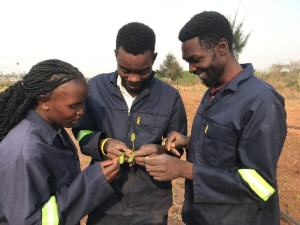
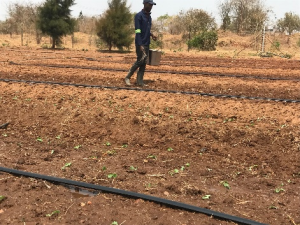
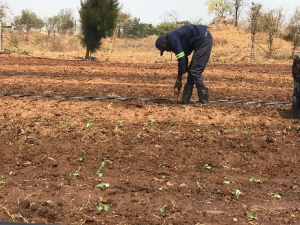
Their story began with modest tools—a horse pipe and a few buckets—that struggled to quench their fields’ thirst. Despite their efforts, their vegetable business faced challenges. However, armed with newfound knowledge, support, and experience from the ENABLE-TAAT Project, they embraced cutting-edge irrigation technologies: the Drip Irrigation System and the Rain-Horse Irrigation System.
The precision of the Drip Irrigation System, delivering water directly to each plant’s roots, maximized hydration while conserving water. Complemented by the Rain-Horse Irrigation System, tailored for closely spaced crops, their fields flourished as never before. Over 6,000 seedlings of rape, 2,300 cabbage seedlings, and 1,000 tomato seedlings thrived, supported by an additional 6,000 assorted vegetable seedlings, strategically planted for a sustainable rotational system.
Their ingenuity didn’t stop at cultivation; they identified eager markets, collaborating with shops like Melisa and other off-takers. Projections were promising: over 1,500 bundles of fresh vegetables per week, translating into a substantial income of $148 per harvest. Cabbages, tomatoes, and assorted vegetables yielded a monthly revenue of $783, meeting the burgeoning demand for fresh, locally-grown produce.
This inspiring tale showcases the power of determination, innovation, and the transformative potential of smart farming technologies. Yvonne, Mostern, and Golden’s journey from struggle to success stands as a testament to the impact achievable through innovative agricultural practices.